


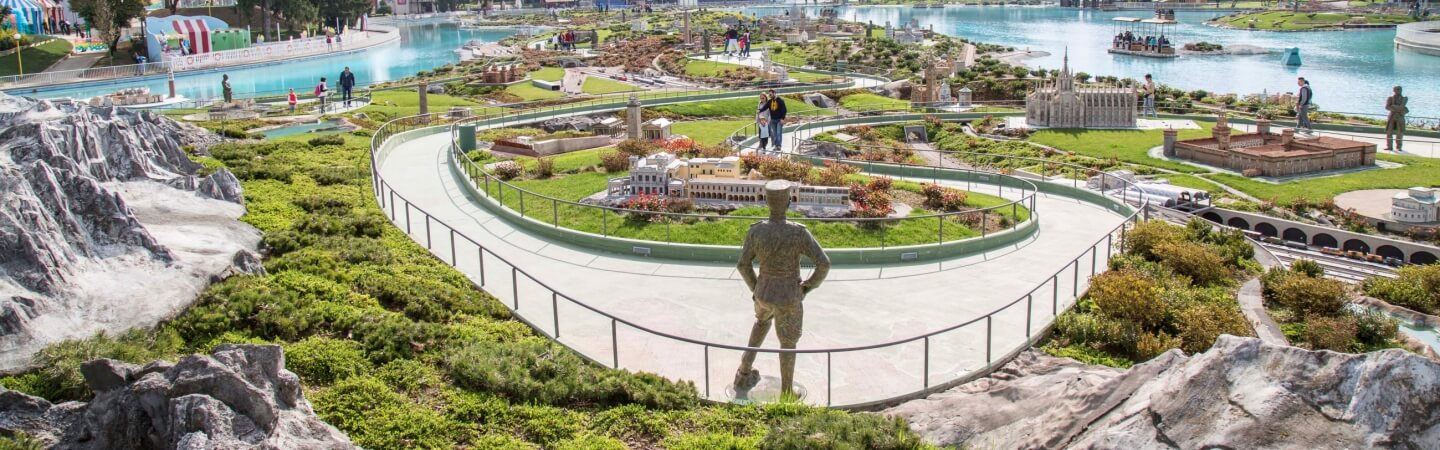
Miniature Italy for Kids: What They Learn and Why They Love It (With an Experience to Enjoy)
If you're looking for an idea that combines wonder with educational value, a miniature park featuring scaled-down monuments and regions is one of those experiences that truly works. Children observe, ask questions, and connect what they see with what they learn at school and in everyday life.
In this guide, you'll discover what children learn, which age groups it is best suited for, how to plan the visit (whether as a family or with a school class), and a real-life example: Minitalia.
In brief: a miniature park with scaled-down monuments and regions makes geography and culture easier to understand by turning maps and place names into a visual, hands-on, and enjoyable experience. With a few guiding questions and the right pace, it becomes a memorable day out that children will remember long after the visit.
Key takeaways:
- What children learn: spatial awareness, Italy's regions and landmarks, observation skills, and vocabulary.
- Who it's for: ideal for families and educational field trips for preschool and primary school children.
- How to make it educational: set simple learning goals, ask the right questions, and include short activities throughout the visit.
- A great example: Minitalia at Leolandia, with attractions and educational content designed especially for younger children.

Why a Miniature Landmark Trail Captivates Children
There’s a reason why children stop, point, and ask, “Where are we now?” when they see miniature landmarks. Seeing so many famous places gathered in one space gives them a sense of discovery and orientation. It feels like taking a journey—but at a pace and scale that’s perfect for them.
What’s more, this kind of environment encourages three things that make a real difference for children:
- Instant curiosity (they ask spontaneous questions, compare what they see, and look for details).
- Visual memory (they remember a landmark because they have “seen it in real life,” even if it’s a miniature).
- Natural connections (they link places to what they’ve learned at school, a city where their grandparents live, or somewhere they’ve seen in a book).
What Children Really Learn: 5 Practical Lessons (Without Feeling Like a Class)
There’s no need to turn the visit into a lesson. The goal is simply to spark curiosity and make meaningful connections. Here are the learning outcomes that emerge most often:
- Spatial awareness: understanding north and south, near and far, and what surrounds a place.
- Hands-on geography: regions, cities, coastlines, and mountains become real images instead of just words.
- Culture and history in bite-sized pieces: “Why is this place important?” (often, one interesting fact is enough).
- Observation skills: noticing details, shapes, and the differences between cities and landscapes.
- Storytelling: describing what they have seen—perfect for drawings, classroom discussions, or short travel journals.

What Age Is It Best For?
It depends on each child's pace and interests, but these guidelines can help you set the right expectations and plan the length of your visit:
- Ages 3–5: a discovery-focused experience, with short stops and plenty of little surprises along the way.
- Ages 6–10: the ideal age to make meaningful connections between regions, landmarks, and interesting facts.
- Ages 10+: the experience becomes even more engaging if you add a simple challenge, such as a themed photo hunt, a friendly quiz, or a short story about the visit afterward.
How to Prepare for Your Family Visit (Just 10 Minutes, Really)
A little preparation goes a long way. Spending just a few minutes before your visit helps children stay engaged and makes the day run more smoothly. Here's all you need to do:
- Choose three simple goals: for example, "Let's find a place we already know," "Let's discover a new Italian region," or "Let's take a postcard-style photo."
- Bring a notebook (or use your phone's notes app): jot down "My favorite thing," "The most surprising thing," and "Something I didn't know before."
- Set a comfortable pace: alternate moments of observation with breaks. If the visit is part of a full day out, plan your schedule in advance.
To help plan your itinerary and break times, you may also find it useful to start with our practical guide on planning your day at the park.
School Version: Before, During and After (Kindergarten and Primary School)
For schools, this type of visit works particularly well because it lends itself to a simple, guided activity without overwhelming the class. Here is a format that can easily be replicated:
Before (in the classroom):
- Choose a region (or draw one at random).
- Prepare 3 keywords for students to "find" during the visit (e.g. sea, mountains, city; or monument, square, castle).
- Set a guiding question: "What makes this region special?"
During (the visit):
- Divide students into small groups, each with a task: observe, describe and ask questions.
- Mini challenge: "Find a place you didn't know before and describe it in two sentences."
- Collect 3 photos or drawings (where permitted), or write down 3 words to remember.
After (back in the classroom):
- Sharing session: each group presents its discovery.
- Classroom map: create a large map of Italy where students can attach words, drawings and connections from their experience.
If you're planning a school trip, you can start by exploring the information dedicated to schools and submit your request through the booking form.
A Practical Example: Minitalia at Leolandia
If you're looking for a real-life experience that combines wonder with educational value, Minitalia is one of the attractions at Leolandia, designed to help visitors discover Italy's rich cultural and historical heritage in an engaging way.
According to the official description, one feature that children especially enjoy is the presence of 16 talking statues of famous Italians, each sharing fascinating stories and fun facts about the region they come from.
You can find the dedicated page here: Minitalia.
For primary school classes, you'll also find dedicated pages for kindergarten school trips and primary school trips.

How to Include It in a Day at the Park (Without Rushing)
If Minitalia is just one stop during a full day at the park, the secret is not trying to do everything. Instead, focus on a few key moments and leave room for surprise and discovery.
Three quick checks that can make your visit much smoother:
- Opening Calendar & Hours: check the calendar so you can be at the park from opening time;
- Park Map: take a look at the map to avoid unnecessary walking and get a sense of distances;
- Family Services: check the services for parents, especially if you're visiting with young children.
Once you've chosen your date, booking online can make planning even easier:
- Fixed-Date Ticket: choose your date and plan your visit at the best available price for that day;
- Prices & Special Offers: check the latest prices and promotions.
5 Mini Activities to Make the Experience Even More Engaging
If you'd like to add a little extra fun without overcomplicating things, try one of these simple but effective activities:
- Postcard Photo: Choose a monument and describe it in three sentences.
- Detail Detective: Find three small details that nobody else noticed.
- Friendly Comparison: "What's different between these two cities?" (architecture, shapes, landscape).
- Easy Quiz: Ask five simple questions without pressure (Where are we? What makes you think this is that place?).
- Final Story: "If you brought a friend here, what would you show them first?"
Conclusion: An Educational Day Out That Inspires Wonder and Learning
A journey through scale models of Italy's landmarks is one of those experiences that works so well because it entertains while encouraging curiosity, observation and meaningful connections. If you're looking for a practical example, you can discover Minitalia and plan your day using official information and helpful resources.
Discover Minitalia: https://www.leolandia.it/minitalia-e-animali.html
To organize a school visit: https://www.leolandia.it/gite-scolastiche.html • https://www.leolandia.it/prenotazione-scuole.html
Frequently Asked Questions (FAQ)
It is an experience featuring scale reproductions of iconic places, allowing children to “travel” through regions and cities in a visual and engaging way.
Above all, they develop a practical understanding of geography and orientation, observation skills, and the ability to describe what they see. Curiosities about places and monuments arise naturally.
Yes, if you keep the pace relaxed: a few long stops, many short discoveries, and frequent breaks. Just 2–3 simple goals are enough to keep their attention high.
With a clear task (one region to explore, 3 keywords to find, one discovery to share) and a follow-up activity in the classroom after the trip.
For Leolandia, you can start with the calendar and opening hours, the park map, family services, and tickets: these are the most useful resources for planning timings and routes.

Choose the offer you prefer
-
-

Fixed-Date Tickets
Double the fun with Fixed-Date Tickets!
-
-

Open Date Tickets
Choose when to visit Leolandia!
-

-

Park + Hotel
Give your family a unique and extraordinary vacation!